B2B format comparison · 2026

Freeze-dried vs soft-dried vs hot-air-dried

Three terms that lead to different textures, applications, costs and stability risks. Select the process from the job the fruit must perform.

Choose freeze-dried

When crispness, visual volume, low weight or fast rehydration justifies the premium.

Choose soft-dried

When direct eating, chew and consumer familiarity matter more than a crisp structure.

Choose hot-air-dried

When scale, versatility and processing economics lead the decision.

01 · Side-by-side

Compare the finished behavior, not the label.

Decision factor Freeze-dried Soft-dried Hot-air-dried
Crisp eating texture Strong fit Poor fit Possible with a low endpoint
Chewy snack texture Poor fit Strong fit Strong fit
Shape and visual volume Usually strongest Moderate More shrinkage
Fast rehydration Usually strongest Application-dependent Usually slower
Lowest processing cost Usually weakest Mid-range Usually strongest
Humidity tolerance after opening Lowest Higher Product-dependent
Added sugar risk Not inherent Common but not required Not inherent
Large-scale mainstream supply More limited Common Strongest

These are directional commercial tendencies, not universal specifications. Fruit, cut, formulation and process endpoint can change the result.

01 · Crisp, porous, premium

Freeze-dried

How it works

Fruit is frozen, then water is removed under vacuum by sublimation.

Typical result

Light pieces with an open structure, strong shape retention and rapid moisture pickup.

Best fit

Premium snacks, cereal inclusions, decoration, powders and products where low weight matters.

Watch for

High conversion cost, breakage, humidity exposure and weak seals.

02 · Chewy, moist, consumer-friendly

Soft-dried

How it works

A finished texture target usually achieved through controlled hot-air or vacuum drying, sometimes with osmotic pretreatment.

Typical result

Dense, flexible pieces with more retained moisture than crisp formats.

Best fit

Retail pouches, snack bars, gifting and direct eating.

Watch for

Added sugar, sulphites, stickiness, water activity and shorter stability margin after opening.

03 · Scalable, versatile, economical

Hot-air dried

How it works

Heated air transfers energy to the fruit and carries evaporated water away.

Typical result

Chewy, firm or crisp pieces depending on fruit, cut, temperature, airflow and endpoint.

Best fit

Mainstream snacks, bakery, foodservice and industrial ingredients.

Watch for

Shrinkage, browning, case hardening, uneven drying and heat-sensitive quality loss.

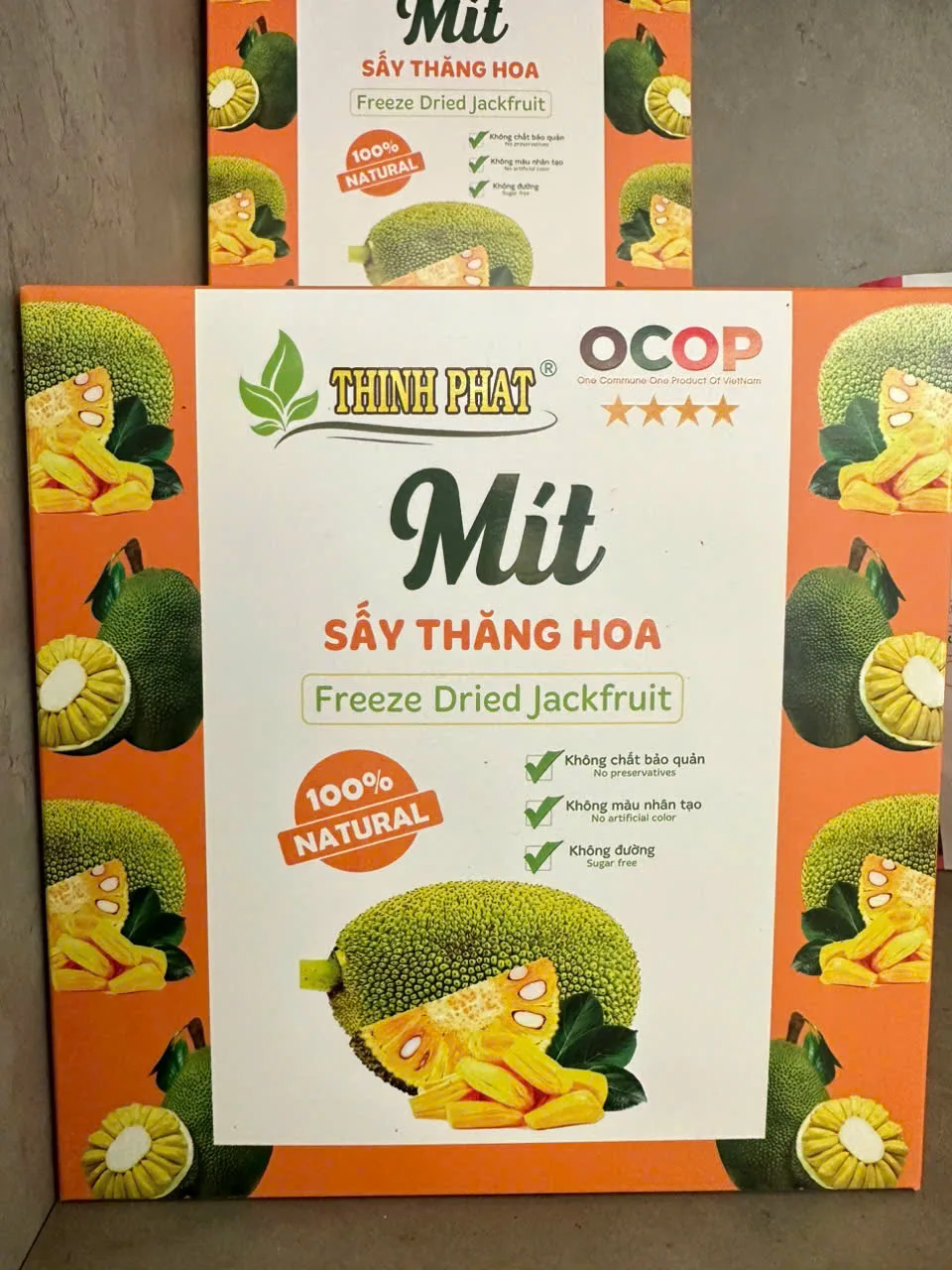
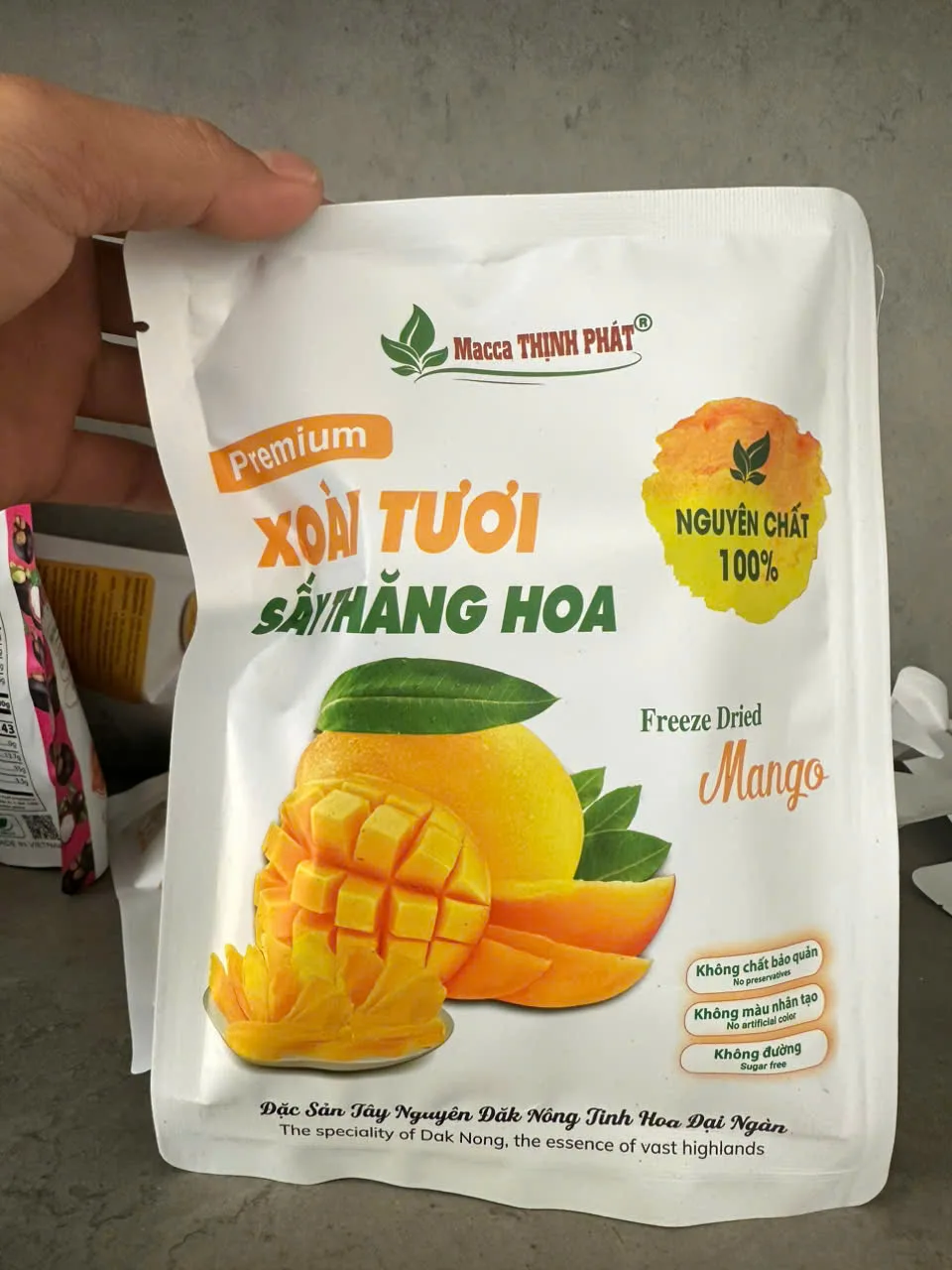
Vietnamese freeze-dried mango retail pack example Vietnamese freeze-dried jackfruit packaging example

Packaging examples show Vietnamese freeze-dried formats. Verify every displayed claim against the producing factory and quoted lot.

02 · Application selector

Start with the product system around the fruit.

01

Premium retail snack

Freeze-dried or soft-dried

Choose crisp novelty and low weight, or familiar chew and stronger pack resilience.

02

Granola or cereal inclusion

Freeze-dried

Low water contribution and crisp texture can suit dry blends, but moisture migration must be tested.

03

Bakery filling or fruit bread

Soft- or hot-air-dried

Dense fruit pieces often tolerate mixing and baking better than fragile porous pieces.

04

Chocolate decoration

Freeze-dried

Color, shape and low weight are useful, provided the chocolate and pack protect against humidity.

05

Snack bar

Soft-dried

Chewy texture can integrate with binders, but water-activity compatibility needs validation.

06

Powder or flavor inclusion

Freeze-dried or milled hot-air-dried

Select by aroma, color, carrier needs, grindability, cost and final application.

03 · Failure modes

What fails after the sample is approved.

Most problems arise from scale-up, moisture movement, changing raw fruit or packaging that was never validated with the product.

01

Freeze-dried loses its crunch

Likely cause

The porous product absorbs humidity through the seal, headspace or after opening.

Buyer control

Set a crispness or water-activity release target, use a high moisture barrier, validate seals and define open-pack handling.

02

Soft-dried becomes sticky

Likely cause

Formula, drying endpoint, storage temperature or moisture migration leaves the surface tacky.

Buyer control

Approve stickiness at defined conditions and specify sugar, glazing, piece separation and pack temperature.

03

Hot-air-dried is hard outside

Likely cause

Fast surface drying creates a barrier while the center remains wetter: a form of case hardening.

Buyer control

Review slice thickness, air temperature, velocity, humidity, loading depth and endpoint distribution.

04

Color differs from the sample

Likely cause

Ripeness, pretreatment, oxygen, heat history or sulphite use changed between batches.

Buyer control

Contract raw-fruit maturity, pretreatment, color range, residual sulphites and approved-sample identity.

05

Shelf life exists only on paper

Likely cause

The claim was copied from another fruit, cut, formula or packaging structure.

Buyer control

Request product- and pack-specific stability evidence under the expected route and storage conditions.

06

A low-water product still fails microbiology

Likely cause

Drying inhibited growth but did not eliminate pathogens, or the product was recontaminated after drying.

Buyer control

Identify the validated kill step, post-dry zoning, environmental controls and finished-lot verification.

Stability rule

Low water does not mean zero risk.

Water activity helps describe growth and stability, but drying is not automatically a validated pathogen kill step. The process and post-dry environment still need review.

Moisture

Total water present in the product under the agreed test method.

Water activity

A measure connected to available water, microbial growth and moisture migration.

Lethality

Separate evidence that the process controls the identified biological hazard.

Shelf life

A result of product, process, pack, seal, route and storage working together.

04 · Packaging

The package preserves the drying decision.

FormatBarrier priorityPossible controlsFailure to inspect
Freeze-driedVery high moisture barrier; oxygen control often matters for color and flavorNitrogen, desiccant or oxygen absorber may be considered based on validationSeal integrity, pinholes, breakage and repeated opening
Soft-driedBarrier matched to water activity, oxidation and desired chewPiece separation, anti-stick approach and temperature control may matterSeal contamination, stickiness, fermentation or mold risk if out of spec
Hot-air driedProduct-specific moisture and oxygen barrierBulk liner, retail pouch or foodservice pack based on useMoisture gradients, oxidation, infestation and texture drift

05 · RFQ checklist

Make the three offers comparable.

01

Product identity

Fruit, variety, origin, maturity, cut and finished format.

02

Process identity

Freeze-dried, hot-air dried or another process; explain how “soft-dried” texture is achieved.

03

Pretreatment

Sugar or syrup, sulphites, acids, blanching, color protection, oil, glazing and processing aids.

04

Physical target

Dimensions, color, texture, bulk density, broken pieces, stickiness and defect tolerances.

05

Stability target

Moisture, water activity, test temperature, shelf life and open-pack handling.

06

Safety controls

Validated hazard-control step, post-dry hygiene, microbiological limits and sampling plan.

07

Chemical tests

Sulphites, pesticides, metals, mycotoxins or oil-quality parameters based on risk.

08

Packaging

Material structure, barrier evidence, gas flush or absorbers, seal method, pack size and cartons.

09

Sample approval

Production-representative sample, lot identity, sensory record and change notification.

10

Commercial terms

MOQ, lead time, seasonal availability, Incoterm, loadability and price validity.
Continue the research

Buying from Vietnam?

Read the export pillar for Vietnamese product formats, trade evidence, market access, supplier qualification and a complete importer workflow.

Vietnam dried-fruit buyer guide →

Buyer questions

Frequently asked questions

What is the difference between freeze-dried and hot-air-dried fruit?

Freeze-drying freezes fruit and removes ice under vacuum by sublimation, usually creating a light, porous and crisp product. Hot-air drying evaporates water with heated airflow, usually producing a denser, more shrunken and chewy or firm product. Cost, texture and packaging needs differ materially.

Is soft-dried fruit a separate drying method?

Not necessarily. Soft-dried usually describes the finished chewy texture and retained moisture. It may be produced with controlled hot-air drying, vacuum drying, osmotic pretreatment or a combination. Buyers should ask for the actual process and formulation.

Which dried fruit format has the longest shelf life?

No format automatically has the longest shelf life. Stability depends on fruit, process endpoint, water activity, oxygen sensitivity, hygiene, package barrier, seal integrity and storage. A supplier should support its claim for the exact product and pack.

Does freeze-dried fruit need special packaging?

Usually yes. Its porous structure absorbs moisture quickly, which destroys crispness and can damage quality. High moisture-barrier packaging, reliable seals and validated headspace controls are generally more important than for denser dried fruit.

Is hot-air-dried fruit always cheaper?

It is usually less processing-intensive than freeze-drying, but final cost also depends on raw-fruit yield, sugar or pretreatment, drying time, energy, labor, sorting, packaging, breakage, scale and supplier utilization.

What should a buyer compare beyond price?

Compare process, formulation, fruit percentage, dimensions, sensory quality, moisture, water activity, microbiological controls, sulphites, packaging barrier, shelf-life evidence, yield in the final application and landed cost.

Select the right format

Send the application, not only the fruit name.

GreenTech can compare format, texture, ingredients, pack and commercial terms against your intended use.