The marketing name hides the process
Warning signal
"Fruit chips" or "soft-dried" appears without a process flow.
Control
Require the drying, frying and pretreatment steps, including time, temperature, vacuum and oil where relevant.
A practical guide to product formats, drying methods, export signals, specifications, food-safety controls and supplier qualification for Vietnamese tropical fruit.
| Signal | Value | Interpretation |
|---|---|---|
| Vietnam HS 0813.40 exports | $37.76m UN Comtrade, 2023. A partial indicator, not the total dried-fruit sector. | UN Comtrade, 2023. A partial indicator, not the total dried-fruit sector. |
| Share shipped to China | 65.5% USD 24.75 million under HS 0813.40 in 2023. | USD 24.75 million under HS 0813.40 in 2023. |
| Share shipped to the US | 19.0% USD 7.18 million under HS 0813.40 in 2023. | USD 7.18 million under HS 0813.40 in 2023. |
| 2022–2023 value change | +84% HS 0813.40 rose from about USD 20.50 million to USD 37.76 million. | HS 0813.40 rose from about USD 20.50 million to USD 37.76 million. |
Vietnam advantage
A broad tropical-fruit base supports snack, ingredient, powder and private-label formats.
Data warning
Mango, banana and prepared products sit in different HS headings, so one export total is misleading.
Buyer priority
Specify ingredients, process, water activity and packaging before comparing prices.
01 · Market evidence
UN Comtrade records approximately USD 37.76 million of Vietnamese exports under HS 0813.40, “other dried fruit,” in 2023. China represented about 65.5% of that value and the United States 19.0%. The category grew about 84% from its reported 2022 value.
This is a useful demand signal, not the size of Vietnam's dried-fruit industry. Dried bananas are classified with bananas, mangoes with mangoes, mixtures separately, and some sweetened, fried or further-prepared products under Chapter 20.
Buyer conclusion
Confirm the exact HS classification with a customs broker before calculating duty, preferential origin or landed cost. Drying technology alone does not determine the code.
02 · Product map
The same fruit can become a chewy snack, crisp inclusion, fried chip or powder. Each is a different buying object.
| Fruit | Export formats | Commercial fit | Buyer check |
|---|---|---|---|
| Mango | Soft-dried slices, hot-air-dried pieces, freeze-dried cubes or slices, powder | Retail snacks, bakery, cereal, confectionery, beverage ingredients | Variety, ripeness, added sugar, sulphites, fiber, cut thickness and stickiness |
| Jackfruit | Freeze-dried pieces, dried chips, vacuum-fried chips | Premium snacks, mixed fruit packs, foodservice and gifting | Drying versus frying, oil type, bulb maturity, seed fragments and broken pieces |
| Dragon fruit | Freeze-dried slices or cubes, dried pieces, powder | Color-forward snacks, cereal inclusions, decoration, smoothies and powders | Red or white flesh, color stability, seed distribution, carrier and moisture pickup |
| Pineapple | Soft-dried rings, chunks or strips; hot-air-dried pieces | Retail snacks, bakery, trail mix, foodservice and confectionery | Core removal, acidity, added sugar, sulphites, chew and ring or piece uniformity |
| Banana | Soft-dried whole or slices, dehydrated pieces, fried or vacuum-fried chips | Mainstream snacks, cereal, bakery and tropical mixes | Cultivar, drying versus frying, oil, sweetness, browning and texture |
| Coconut & mixed fruit | Chips, pieces, flakes and multi-fruit retail or ingredient blends | Snack mixes, granola, bakery, foodservice and private label | Ingredient percentages, oil or sugar, allergen controls and moisture migration |
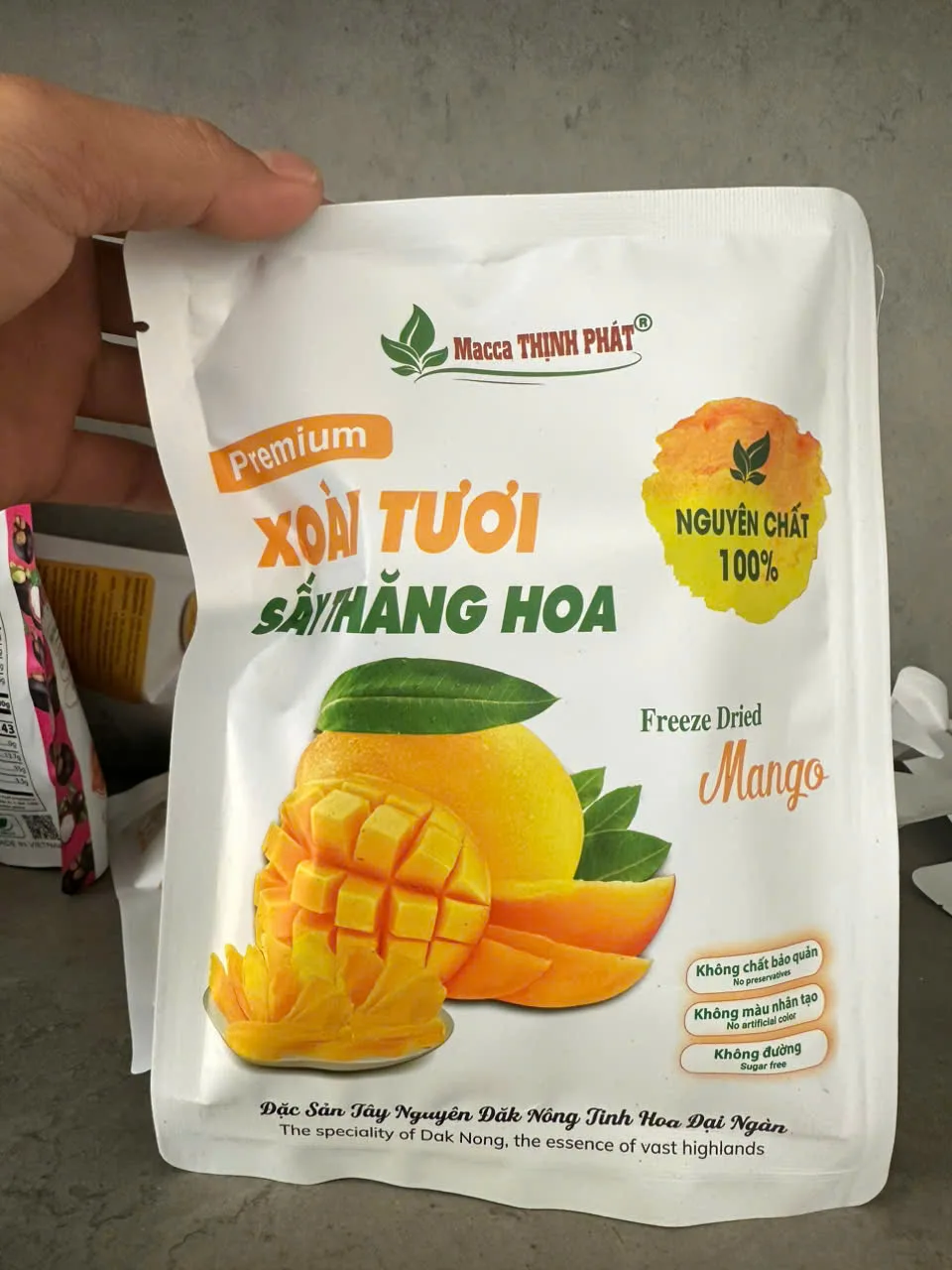
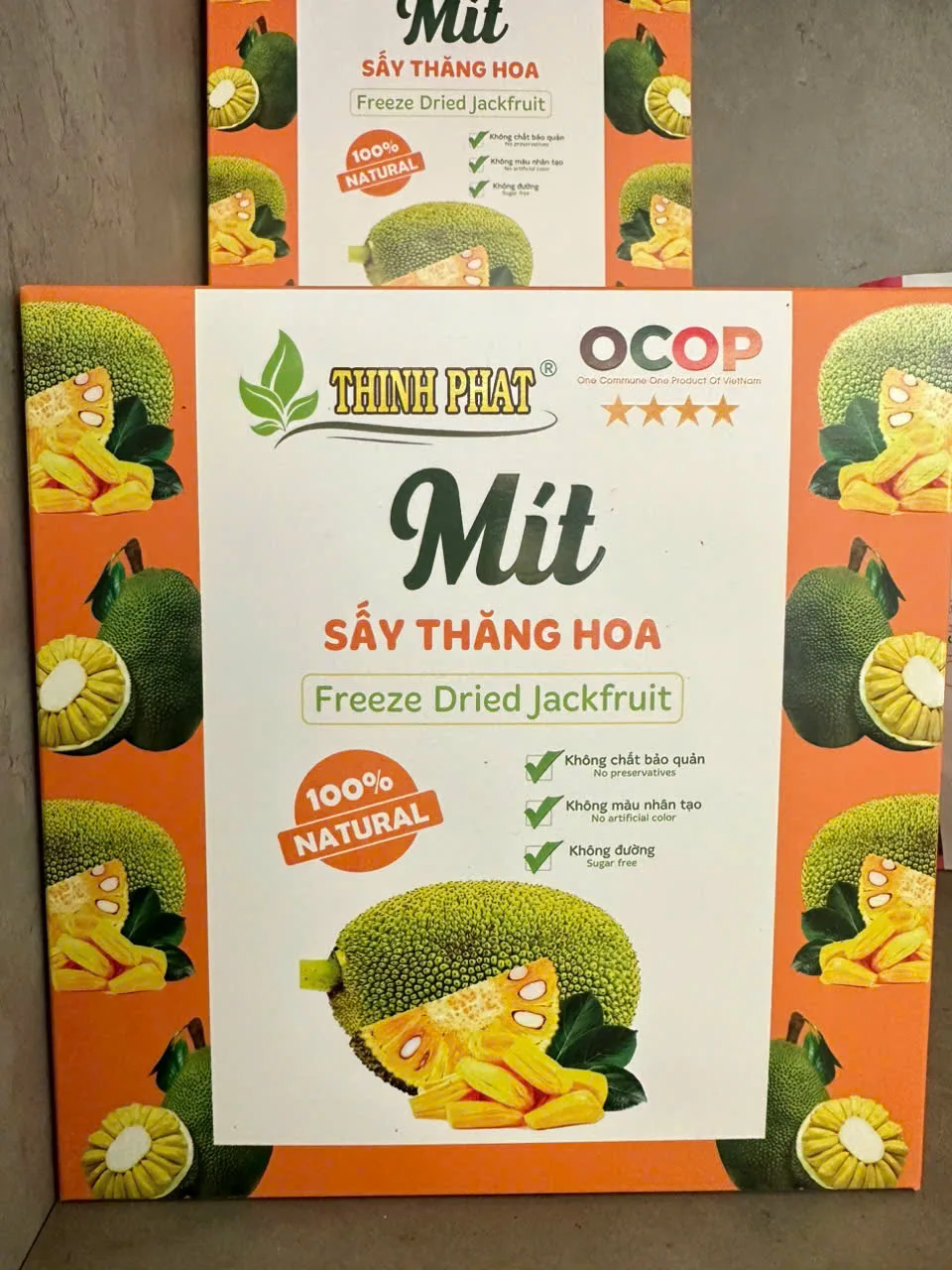
Packaging examples illustrate available Vietnamese product formats. Buyer specifications and brand claims must be verified for the quoted lot.
03 · Process decoder
Freeze-dried
Light, porous and crisp
Strength: Strong shape, color and aroma retention; rapid rehydration
Tradeoff: High conversion cost and extreme sensitivity to humidity after drying
Best fit: Premium snacks, cereal inclusions, decoration and powder
Hot-air dried
Dense, chewy or firm
Strength: Scalable production and generally competitive cost
Tradeoff: Shrinkage, browning, heat exposure and batch-to-batch texture variation
Best fit: Mainstream snacks, bakery, foodservice and ingredients
Soft-dried
Moist and chewy
Strength: Consumer-friendly eating texture
Tradeoff: Higher moisture and water activity require tighter formulation and shelf-life control
Best fit: Retail pouches, snack bars and gifting
Vacuum dried
Crisp or semi-crisp
Strength: Lower-temperature processing can protect color and aroma
Tradeoff: Higher equipment cost and fewer qualified suppliers
Best fit: Premium slices and heat-sensitive fruit
Osmotic + dried
Sweet, pliable and uniform
Strength: Texture control and shorter final drying time
Tradeoff: Added sugar or treatment solution changes label, nutrition and buyer positioning
Best fit: Sweet snacks and confectionery
Vacuum fried
Crisp and rich
Strength: Appealing chip texture and good visual color
Tradeoff: It is a fried product: oil type, fat, oxidation and acrylamide become material
Best fit: Banana, jackfruit and mixed fruit chips
04 · Risk register
Dried-fruit disputes often begin with undefined terminology, incomplete formulations or a shelf-life claim disconnected from the final pack.
Warning signal
"Fruit chips" or "soft-dried" appears without a process flow.
Control
Require the drying, frying and pretreatment steps, including time, temperature, vacuum and oil where relevant.
Warning signal
The specification gives only a moisture percentage.
Control
Set both moisture and product-specific water-activity targets, test temperature and release limits.
Warning signal
"Natural fruit" is quoted but the formula contains syrup or an osmotic treatment.
Control
Contract fruit percentage, all ingredients, processing aids and the exact added-sugar claim.
Warning signal
Color is unusually bright but the ingredient statement and COA are silent.
Control
Ask whether sulphiting agents are used at any stage and set a residual SO2 limit with an agreed method.
Warning signal
No validated lethality step or post-dry hygiene plan is documented.
Control
Identify the hazard owner, process validation, hygienic zoning and lot-verification program.
Warning signal
Shelf life is quoted without barrier data or climate assumptions.
Control
Match water-vapor and oxygen protection to the product, pack size, route and expected storage conditions.
Stability decision
Moisture reports how much water is present. Water activity helps describe how available that water is for microbial growth, texture change and chemical reactions. Both belong in a serious dried-fruit specification.
There is no responsible universal water-activity number for every fruit, texture, formula and package.
1. Product target
Set limits around the intended crisp or chewy texture, not a copied generic specification.
2. Process capability
Review batch distribution, sampling points, test temperature and release tolerance.
3. Packaging barrier
Control moisture and oxygen ingress across the expected route, climate and shelf life.
4. Validation
Support the stated shelf life with product- and pack-specific evidence, not a category assumption.
05 · Ingredients & safety
Added sugar
Osmotic pretreatment can change sweetness, nutrition and claims. Contract fruit percentage, sugar source and label wording.
Sulphites
Request use declarations, residual SO2 limits and lot testing. US and EU rules use 10 ppm or mg/kg thresholds in relevant labeling frameworks.
Pathogens
Identify the validated hazard-control step, post-dry hygienic zoning, environmental program and lot verification.
Residues & contaminants
Build pesticide, metal, mycotoxin and processing-contaminant panels from the fruit, process and destination market.
06 · Market access
US
EU
CN
Requirements depend on product formulation, classification and shipment date. This guide is operational sourcing information, not legal advice.
07 · Buyer workflow
Snack, bakery, cereal, beverage powder and decoration programs need different texture, cut, stability and ingredient rules.
State fruit, variety, form, drying process and whether the product may be fried or sweetened.
Set ingredients, dimensions, defects, sensory targets, moisture, water activity and analytical limits.
Review the actual producing site, process flow, certification scope, hazard controls and traceability.
Use production-representative samples and record color, texture, flavor, breakage, stickiness and rehydration.
Connect COAs, laboratory samples, production records and packaging codes to the loaded shipment.
Confirm barrier packaging, desiccant or oxygen-control policy, cartons, container dryness and loading conditions.
Inspect seal integrity, moisture pickup, texture, oxidation, defects and label compliance before release.
08 · RFQ worksheet
Send one structured specification to every supplier. A low price is not comparable when process, ingredients or packaging are missing.
Identity
Fruit, botanical name if needed, variety, origin, harvest window and finished-product form.
Process
Freeze-dried, hot-air dried, vacuum dried, soft-dried, osmotic dried or fried; include pretreatments.
Ingredients
Fruit percentage, sugar, sulphites, acids, colors, flavors, oil, glazing agents, carriers and anti-caking agents.
Physical
Cut, dimensions, thickness, color, texture, bulk density, broken pieces and foreign-material limits.
Stability
Moisture, water activity, test methods, shelf life, storage conditions and open-pack instructions.
Microbiology
Agreed organism limits, sampling plan, methods, laboratory and lot-disposition rules.
Chemistry
Destination-specific pesticides, sulphites, heavy metals, mycotoxins or oil-quality tests where relevant.
Packaging
Material structure, barrier target, nitrogen or absorbers, net weight, cartons, pallets and labels.
Traceability
Raw-fruit intake, process batch, packing lot, retained sample, change notification and recall linkage.
Commercial
Quantity, MOQ, Incoterm, named port, loadability, lead time, price validity, payment and claims process. Review trade rules in our Incoterms Vietnam Guide.
Buyer questions
Vietnam supplies tropical dried-fruit formats including mango, jackfruit, dragon fruit, pineapple, banana, coconut and mixed-fruit products. Commercial formats include soft-dried slices, hot-air-dried pieces, freeze-dried fruit, chips and powders. Availability and process capability must be confirmed with the actual factory.
Not universally. Freeze-dried fruit is light, crisp and suited to premium snacks or inclusions, but it costs more and absorbs moisture quickly. Hot-air-dried fruit is denser and often more economical for chewy snacks, bakery and foodservice. The correct method depends on application and target price.
Soft-dried usually describes the intended chewy texture and retained moisture rather than one universal process. Suppliers may use hot air, vacuum, osmotic pretreatment or combinations. Buyers should request the process flow, ingredients, moisture and water activity.
Moisture measures total water, while water activity reflects how available that water is for microbial growth and chemical change. Two products with similar moisture can behave differently. Use product-specific limits supported by process and shelf-life validation.
Some do and some do not. Formulation varies by fruit, process and customer. Buyers should not rely on appearance or marketing claims: request the complete formula, processing aids, residual sulphite result and destination-compliant label wording.
There is no single dried-fruit code. Dried banana, mango, other dried fruit, mixtures and further-prepared products can fall under different headings. Ingredients and processing can change classification, so confirm the exact product with a customs broker before calculating duty.
Research notes
Trade data is dated and classified by customs heading. Regulations and databases should be checked again at contract and shipment.
UN Comtrade: Vietnam HS 0813.40 Exports ↗
2023 annual trade data
Trade value and destination data for "other dried fruit." This excludes dried fruit classified under fruit-specific or prepared-food headings.
Codex CXS 360-2020 ↗
General Standard for Dried Fruits
International reference for dried-fruit identity, quality and labeling. Destination and buyer requirements can be stricter.
FDA: Water Activity in Foods ↗
FDA inspection technical guide
Explains water activity, microbial stability and why dehydration controls must remain effective during storage.
21 CFR 101.100 ↗
US food-labeling regulation
Defines 10 ppm or more as a detectable amount for sulfiting agents in the relevant labeling exemption.
EU Food Information Regulation ↗
Regulation (EU) No 1169/2011
Mandatory food information, ingredients and allergen or intolerance declarations, including sulphites under the applicable threshold framework.
European Commission: Pesticide MRLs ↗
Current database; verify per shipment
EU maximum residue levels are commodity- and active-substance-specific. Drying can concentrate residues.
European Commission: Food Contaminants ↗
Updated February 2026
Current EU framework for contaminants including mycotoxins, metals and processing contaminants.
Vietnam supply
Send GreenTech your application, destination, product format, ingredients, testing and packaging requirements for a comparable dried-fruit offer.
Chat with us