2026 Buyer Decision Guide
Pulp, puree
or concentrate?
Three names used loosely across processors and markets. The question is not what the sales sheet calls it, but what is physically inside the pack and whether it fits the application.
Start Here
The name is only shorthand.
"Pulp," "puree" and "concentrate" are not used consistently by every processor or market. A seeded frozen product may be called pulp, juice or puree on different offers. The operational question is not what the sales sheet calls it, but what is physically inside the pack.
Define ingredient statement, seed level, Brix, acidity, thermal process, microbiology and storage regime before comparing price.
Format Decoder
What changes from one format to the next.
The processing chain can branch. Concentrate may be made from juice or puree, and pulp can be supplied with different seed and particle levels. Confirm the actual flow with the processor.
- 01
Texture retained
Pulp
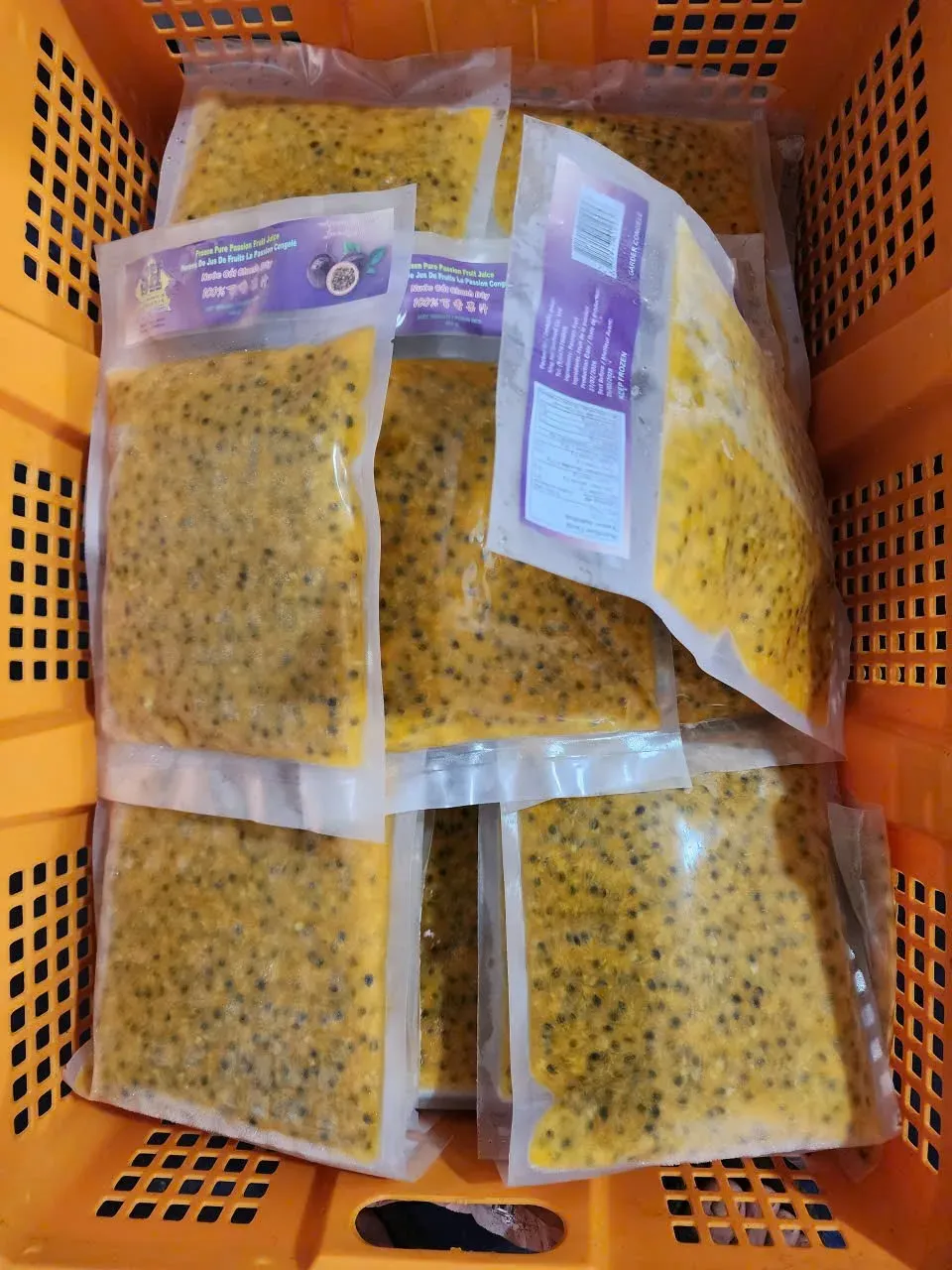
Extracted fruit flesh, commonly supplied with visible seeds or as a partially screened product.
Best fit
Cocktails, toppings, bakery fillings, food service and products where texture signals real fruit.
Put in the contract
Seed percentage, particle size, Brix, pH, acidity, foreign matter, pack size and frozen-storage temperature.
- 02
Smooth, single strength
Puree
Fruit flesh processed to a uniform consistency, typically screened to remove seeds and coarse particles.
Best fit
Smoothies, dairy, desserts, sauces and beverages that need consistent texture without reconstitution.
Put in the contract
Sieve size, single-strength status, Brix, acidity, viscosity, heat treatment, additives and microbiological limits.
- 03
Water removed
Concentrate
Puree or juice with part of its water removed to increase soluble solids and reduce freight per unit of fruit solids.
Best fit
Industrial beverage bases, flavor systems and high-volume manufacturing with controlled reconstitution.
Put in the contract
Target Brix, reconstitution basis, acidity, clarification, aroma recovery, thermal history and aseptic pack format.
Application Fit
Choose backward from the finished product.
Format selection follows the end product, not the purchase price. Each row maps a buyer need to the format that fits it.
Visible fruit texture
Pulp
Seeds and fruit particles can be part of the product experience.
Smooth ready-to-use base
Puree
Uniform texture reduces downstream screening and blending work.
Freight-efficient fruit solids
Concentrate
Less water is shipped, but the plant must reconstitute accurately.
Small food-service batches
Pulp or puree
Frozen bags simplify portioning; choose based on desired seed texture.
Standardized industrial beverage
Puree or concentrate
Puree simplifies use; concentrate can improve logistics at scale.
Premium cocktail or dessert garnish
Pulp
Visible seeds and natural texture communicate ingredient identity.
Landed Cost
Do not compare the price per kilogram alone.
Puree carries its natural water. Concentrate removes part of that water. Pulp may create screening loss if the final product cannot use seeds. Normalize offers to the same usable output before choosing.
Compare on
Cost per kg of usable single-strength equivalent
Include
Freight, cold storage, yield loss, water and plant handling
Brix is not a complete flavor score.
Soluble solids matter for identity and yield calculations, but acidity, aroma, maturity, thermal history and dilution also determine how passion fruit performs in the finished product.
RFQ Checklist
Turn the format name into a specification.
Send the same structured request to every supplier. Comparable offers expose missing controls before sampling or contracting.
- 01 Identity
- Exact commercial name, fruit species or variety, country of origin, single strength or concentrated.
- 02 Composition
- Ingredient statement, seed content, added sugar, acid, water, preservative, color or flavor declarations.
- 03 Physical
- Brix, pH, titratable acidity, viscosity or consistency, sieve or particle size, color and sensory reference.
- 04 Microbiology
- Test methods and limits for total count, yeast, mold, pathogens and any market-specific criteria.
- 05 Process
- Extraction, screening, pasteurization, freezing or concentration method and critical thermal conditions.
- 06 Packaging
- Net weight, liner and closure, carton or drum, pallet pattern, lot code, label language and shelf life.
- 07 Logistics
- Frozen or ambient regime, loading quantity, reefer settings, data logger and temperature acceptance rules.
- 08 Verification
- Pre-shipment sample, approved specification, certificate of analysis, retained sample and change control.
Packaging Format
Frozen bag, frozen drum or aseptic drum?
- 01
Frozen retail or food-service bags
Easy to portion, but require continuous frozen storage and more packaging per tonne.
- 02
Frozen bulk packs
Suitable for industrial users with thawing capacity and a controlled frozen supply chain.
- 03
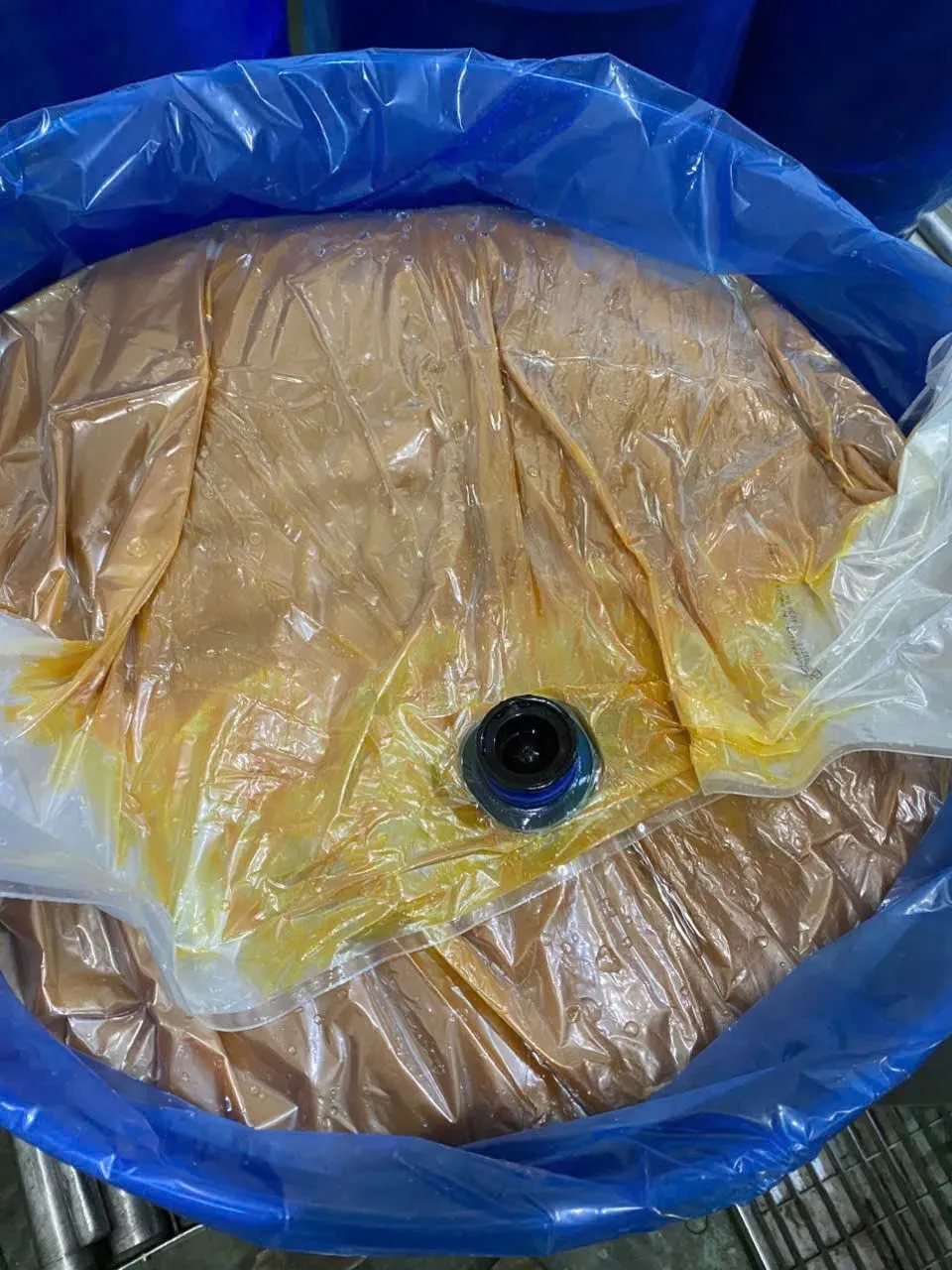
Aseptic drums or IBCs
Can simplify ambient logistics when the validated process, liner, closure and shelf-life specification support it.
Never infer storage conditions from the product name. Use the supplier's validated packaging and shelf-life specification.
Buyer FAQ
Questions buyers ask first.
01 Is passion fruit pulp the same as passion fruit puree?
Not reliably. In trade, pulp may contain seeds and larger fruit particles, while puree usually describes a smoother, screened product. Supplier terminology varies, so the contract should state seed content, sieve size, texture and process.
02 Is concentrate always cheaper than puree?
Not necessarily. Concentrate may reduce freight and storage per unit of fruit solids, but buyers must include reconstitution water, processing, yield losses, packaging, duties and quality requirements in the landed-cost comparison.
03 What Brix should passion fruit puree or concentrate have?
The required value depends on product identity and the agreed specification. GreenTech's current catalog lists single-strength puree at 14–16° Brix and concentrate at 50° Brix. Buyers should confirm the shipment specification and test method before contracting.
04 Which format is best for beverage manufacturing?
Puree is often simpler when a smooth, ready-to-use ingredient is required. Concentrate can be more logistics-efficient for high-volume plants that can control water quality and reconstitution. Pulp is useful when visible seeds or texture are intentional.
Source from Vietnam
Send the application, not just the ingredient name.
GreenTech can help match passion fruit format, specification and packaging to your processing line and destination market.
Continue researching
Vietnam Passion Fruit Importer Guide →Sourcing seasons, fresh fruit, processing, quality controls, packaging and market-access checks.
Reference standard
Codex CXS 247-2005 →General Standard for Fruit Juices and Nectars, including product identity and composition references.